


Performance Requirements of Wear-Resistant Castables for Waste Incinerators
As waste incinerators continue to grow in size, the technical requirements for wear-resistant castables are becoming increasingly stringent. These castables need to withstand high temperatures, high strength, and prolonged wear, making their quality and performance crucial. Below, we will detail the main requirements for wear-resistant castables used in incinerators.
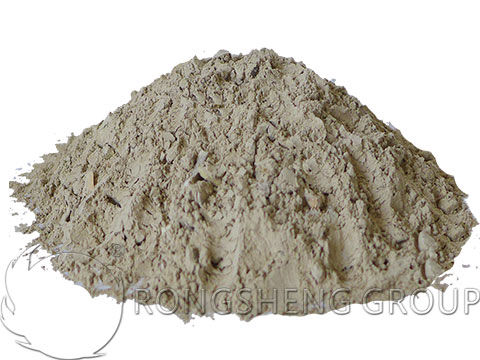
First, wear-resistant castables must possess excellent wear resistance. In waste incinerators, wear-resistant castables undergo severe wear due to high temperatures, high strength, and prolonged abrasion. Therefore, they must be able to resist this wear to ensure the long-term stable operation of the furnace.
Second, wear-resistant castables must possess excellent high-temperature resistance. Waste incinerators operate at high temperatures, so wear-resistant castables must maintain stable performance under high-temperature environments, without decomposition or deterioration.
Third, wear-resistant castables must have good thermal shock resistance to resist damage caused by furnace temperature changes.
Furthermore, wear-resistant castables must also possess excellent corrosion resistance. The flue gas and waste in waste incinerators contain a large amount of corrosive substances, which can corrode wear-resistant castables. Therefore, wear-resistant castables must be able to resist the erosion of these corrosive substances to ensure a long service life.
Finally, wear-resistant castables must also have good workability. During construction, the wear-resistant castable should be easy to handle, have good flowability and filling properties, and be able to smoothly flow into all corners of the furnace, ensuring construction quality and efficiency.
In summary, with the trend towards larger-scale waste incinerators, the technical requirements for wear-resistant castables are becoming increasingly stringent. Wear-resistant castables must possess excellent wear resistance, high-temperature resistance, corrosion resistance, and good workability to meet the operational requirements of waste incinerators and ensure their long-term stable operation.
Based on the requirements for incinerator refractory castables, most incinerators use high-alumina wear-resistant castables. These materials are mainly composed of traditional high-alumina clinker, and their raw material composition varies depending on the type and content of impurities. Through continuous research and analysis, scholars have found that homogeneous materials with an Al₂O₃ content of 70%–90% and a bulk density of 2.9–3.5 g·cm³ possess characteristics such as low porosity, low water absorption, high bulk density, and high uniformity. Through uniform processing and appropriate high-temperature calcination, this material achieves structural, performance, and quality stability and uniformity, avoiding impurity concentration.
In waste incinerator wear-resistant castables, the introduction of homogeneous materials not only reduces the porosity of the material but also improves its strength and wear resistance. Furthermore, it improves the resistance of wear-resistant castable materials to fly ash erosion and permeability, extending the service life of wear-resistant castable materials in key parts of the incinerator. This ensures the stable operation of the incinerator. This material plays a vital role within the incinerator, providing a reliable guarantee for its stable operation.
Comments